
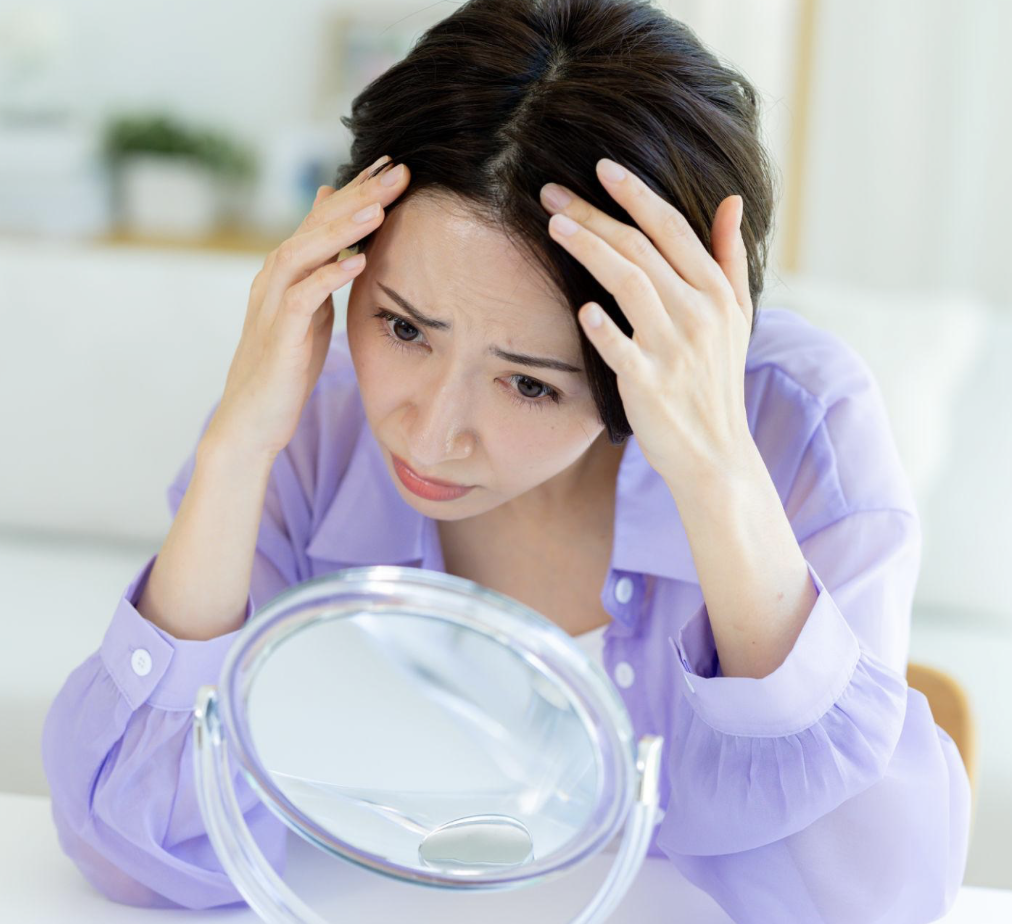
You reach for your brush and stop. Again. More hair than yesterday. Your ponytail feels thinner. Your part looks wider. And nobody seems to have a real answer.
Here’s the truth — and it’s actually good news.
This is not simply aging, even though many of. my patients have been told this by their conventional doctors. This is not just genetics. And it is absolutely not something you have to accept. Your hormones are likely at the center of what’s happening — and when you understand exactly why, you can finally do something meaningful about it.
A Personal Note From Dr. Helene
I want to pause here and share something personal — because I believe it matters.
I am not just your doctor on this topic. I am also a patient who has lived this experience firsthand.
For many years, I struggled with hair loss myself — and had absolutely no idea why. I did what most women do. I tried everything. Supplements, serums, potions, scalp cleansers, special shampoos. You name it — I tried it. And nothing worked. Not really.
It wasn’t until I stopped chasing surface-level solutions and started looking deeper that I finally found my answer. For me, it turned out to be a combination of two things working against me simultaneously — a significant hormonal imbalance AND a thyroid deficiency. Two root causes that no serum or supplement could ever fix on their own.
Basic blood work did not show what was really happening with my thyroid and hormones, and how that was causing my hair loss. It was Functional Medicine root-cause testing that finally revealed what was happening in my body.
Once I had those results, I was able to identify and correct those underlying issues — and discovered which specific hair loss treatments were right for MY unique body — my journey toward a full head of hair finally began.
I want to be honest with you — I am still on that journey. Because real healing takes time. But knowing the WHY and getting to the root cause changed absolutely everything. And that is exactly why I am so passionate about helping you find YOUR why.
Your Hair Follicles Are Directly Responding to Your Hormones
Most people don’t realize this — but your hair follicles are hormonally sensitive. As estrogen, progesterone, and testosterone shift during perimenopause and menopause, your entire hair growth cycle changes with them.
Estrogen keeps hair actively growing. When it declines, hair spends more time resting than growing — resulting in finer strands, slower growth, increased shedding, and loss of fullness. Most women notice this first as a widening part or a thinner ponytail.
Progesterone acts as your body’s natural buffer against stress. When it drops — which happens early in perimenopause — your scalp loses a critical layer of hormonal protection.
Testosterone and DHT add another layer of complexity. DHT, a byproduct of testosterone, can gradually shrink hair follicles over time in a process called miniaturization. Importantly, how sensitive your follicles are to DHT is largely determined by your unique genetic makeup — which is exactly why two women experiencing identical hormonal changes can have completely different hair loss experiences.
Stress, Cortisol and Your Hair
Chronic stress doesn’t just affect your mood — it directly affects your hair. When cortisol stays elevated too long, it pushes follicles prematurely into their resting phase, triggering widespread shedding known as telogen effluvium. This often appears two to four months after a stressful event — making it especially difficult to connect the dots without professional guidance.
Don’t Overlook Your Thyroid
Because hair follicles are among the most metabolically active cells in your body, even subtle thyroid imbalances can cause brittle hair, slower regrowth, dryness, and diffuse thinning. Thyroid dysfunction is one of the most commonly overlooked contributors to hair loss in women over 40. And basic blood work is not enough to get to the root cause.
Why Generic Hair Growth Products From The Internet Keep Failing You
Here is the real reason the supplements and serums that are all over the internet aren’t working — they are designed for everyone, which means they are designed for no one in particular.
Your response to any hair loss treatment is directly influenced by your unique genetic makeup. Specialized genetic testing can reveal exactly how your body metabolizes hormones, how sensitive your follicles are to DHT, and which specific treatments are most likely to work for YOU — not for the average woman on the internet.
That is the difference between guessing and knowing. Between wasting money and actually getting results.
Your Hair Is Sending You a Signal — Are You Ready to Listen?
Menopause hair loss is not just cosmetic, it’s a medical condition. Your body asking for attention — and you deserve real answers, not another bottle of false hope.
If you are an existing patient, schedule your Follow Up Telemedicine Visit today to discuss your hair concerns and explore whether genetic testing is right for you.
If you are not yet a patient, apply here to become one. Together we will uncover the real root cause and build a plan designed entirely around YOU.
Not one-size-fits-all. You-sized.
Your hair deserves answers. So do you. Book your Hair Loss Assessment today.
Yours In Health,
Dr. Helene
Related Blogs
The Naturopathic Approach to Thyroid Health
Are Bio-Identical Hormones Right for Me?
Are You in Menopause? You May Be Lacking Important Nutrients
Why Are Thyroid Issues More Common in Women?(And what you can do about it)
References
Mayo Clinic — Female Hair Loss • NIH — Telogen Effluvium