
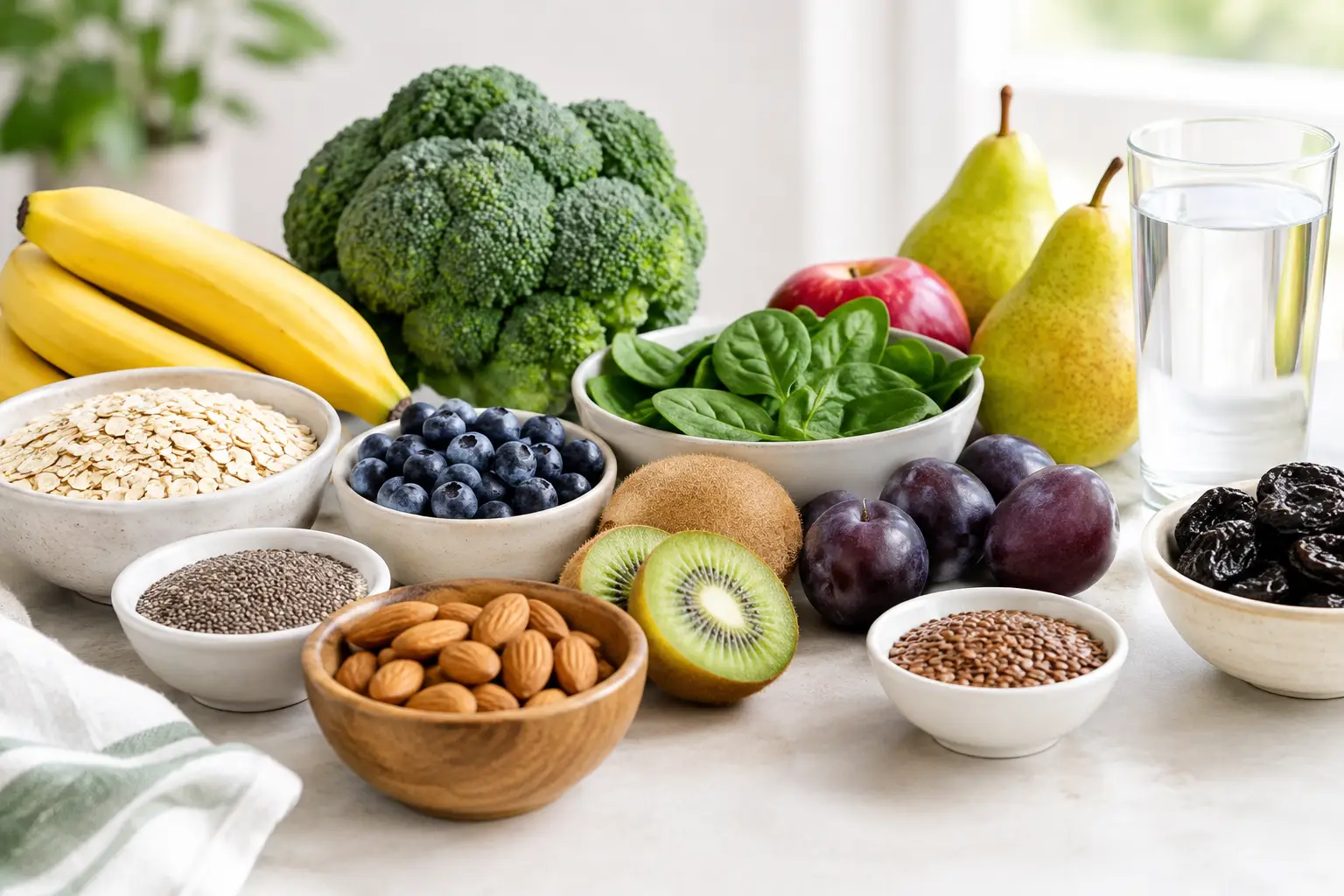
When you are bloated, uncomfortable, and still waiting for a bowel movement, being told to simply “eat more fiber” can feel dismissive. The best foods for constipation do contain fiber, but relief often depends on the type of fiber, how quickly you increase it, your fluid intake, stress level, movement, hormones, and the health of your digestive system.
Constipation is common during midlife, especially when hormone shifts, thyroid concerns, disrupted sleep, travel, stress, changing routines, or weight-loss medications affect digestion. You do not have to accept feeling sluggish and backed up as your new normal. Thoughtful food choices can support more comfortable, consistent regularity while giving your gut the nourishment it needs.
What Makes a Food Helpful for Constipation?
Fiber is the starting point, but it is not the whole story. Insoluble fiber adds bulk to stool and helps move material through the digestive tract. Soluble fiber absorbs water and creates a softer, gel-like consistency that can make stool easier to pass. Many plant foods offer a useful combination of both.
Foods with natural sorbitol, a sugar alcohol found in certain fruits, may also gently encourage bowel movements. Magnesium-rich foods can support normal muscle function, including the muscles involved in digestion. Just as importantly, fiber needs water. Adding large amounts of bran or raw vegetables without enough fluids can worsen gas, cramping, and constipation for some people.
The goal is not to force your body into a rigid schedule. It is to support a bowel pattern that feels easy, complete, and regular for you.
12 Best Foods for Constipation
1. Prunes
Prunes are one of the most reliable food-based options for constipation. They provide fiber and sorbitol, which can draw water into the bowel and help stool pass more comfortably. Start with two or three prunes a day rather than a large serving, particularly if you are prone to bloating, then adjust based on how your body responds.
2. Kiwifruit
Kiwi is a gentle choice for many people who do not tolerate heavier fiber foods well. It provides fiber, fluid, and naturally occurring enzymes that may support digestion. One or two kiwis daily, eaten on their own or added to yogurt or a smoothie, can be an easy routine.
3. Pears and Apples
Pears and apples contain pectin, a soluble fiber that supports stool softness. Pears also contain sorbitol. Eat the peel when tolerated, since much of the insoluble fiber is found there. If raw apples feel hard on your stomach, try unsweetened applesauce or gently stewed apples instead.
4. Berries
Raspberries, blackberries, strawberries, and blueberries are fiber-rich without requiring a large portion. They also add color and antioxidant variety to meals. Stir berries into plain Greek yogurt, chia pudding, or oatmeal for a breakfast that supports both fullness and regularity.
5. Oats
Oats are a comforting source of soluble fiber, especially beta-glucan. A warm bowl of oatmeal may be easier to tolerate than a high-fiber cereal, which can be overly processed or harsh for a sensitive gut. Choose plain rolled or steel-cut oats and add fruit, cinnamon, and a spoonful of ground flaxseed.
6. Ground Flaxseed
Ground flaxseed offers fiber and healthy fats that can support stool consistency. Whole flaxseed often passes through the digestive tract intact, so ground flax is generally more useful. Begin with one teaspoon to one tablespoon mixed into oatmeal, yogurt, or a smoothie, and drink water alongside it.
7. Chia Seeds
When soaked in liquid, chia seeds form a soft gel that can help support hydration in the stool. Add one tablespoon to overnight oats, yogurt, or a glass of water with lemon. Because chia expands, start slowly and avoid taking dry chia seeds by the spoonful.
8. Beans and Lentils
Beans, lentils, and chickpeas provide substantial fiber and prebiotics, which nourish beneficial gut bacteria. They are excellent foods for long-term bowel regularity, but they can cause gas if your digestive system is not used to them. Begin with a quarter to a half cup, rinse canned beans well, and increase gradually over several weeks.
9. Leafy Greens and Cooked Vegetables
Spinach, kale, Swiss chard, broccoli, Brussels sprouts, zucchini, carrots, and winter squash all contribute fiber, potassium, and fluid. Cooked vegetables are often easier to digest than large raw salads, especially if you are already constipated and bloated. A simple plate of roasted vegetables with olive oil can be more supportive than trying to eat an oversized salad.
10. Avocado
Avocado provides fiber along with satisfying monounsaturated fats. Those healthy fats can make meals more filling, which is helpful when you are working toward sustainable weight changes without overly restricting food. Add avocado to eggs, grain bowls, soups, or a sandwich instead of relying on highly processed spreads.
11. Sweet Potatoes
Sweet potatoes offer soluble and insoluble fiber in a soothing, naturally sweet package. Their potassium content also supports healthy fluid balance. Bake or steam them with the skin on when possible, and pair them with protein for a steady, satisfying meal.
12. Plain Yogurt or Kefir, If Tolerated
Fermented dairy foods may support the gut microbiome through beneficial live cultures. For some people, this can improve digestive regularity over time. Choose plain yogurt or kefir with minimal added sugar, and skip it if dairy consistently causes cramping, congestion, loose stools, or other symptoms for you. A personalized approach matters more than forcing a “healthy” food that does not agree with your body.
How to Add Fiber Without Feeling Worse
A sudden fiber overhaul is a common reason people feel more uncomfortable after trying to address constipation. If your current diet is low in plant foods, make one change at a time. For example, add berries to breakfast for several days, then introduce a tablespoon of ground flaxseed, then work on adding a serving of cooked vegetables at dinner.
Aim to drink fluids consistently throughout the day rather than trying to catch up at night. Your personal needs vary with body size, activity, climate, caffeine intake, and medications, but pale yellow urine is often a practical sign that hydration is adequate. Warm liquids in the morning, such as herbal tea or warm water, may also help stimulate the natural gastrocolic reflex that encourages a bowel movement after eating.
Movement matters, too. A ten-minute walk after meals can support digestion, blood sugar balance, and stress regulation. When the nervous system is stuck in a rushed, tense state, the gut can become slower and less coordinated. Give yourself enough time in the bathroom, and resist the urge to ignore the signal to go.
When Food Is Not the Full Answer
Food is powerful, but persistent constipation can point to a deeper imbalance. Low thyroid function, pelvic floor dysfunction, iron supplements, dehydration, food sensitivities, microbiome changes, chronic stress, and certain medications can all contribute. Constipation is also reported by some people using GLP-1 medications for weight management, particularly during dose changes or when appetite and fluid intake decrease.
If constipation has lasted more than a few weeks, keeps returning despite lifestyle changes, or is paired with fatigue, weight changes, hair thinning, abdominal pain, or hormone-related symptoms, a more complete evaluation can be helpful. At Pacific Naturopathic Health, individualized care looks beyond the symptom to explore digestion, nutrition, hormones, thyroid health, stress, and the factors that may be slowing your system down.
Seek prompt medical care for severe or worsening abdominal pain, vomiting, fever, a swollen abdomen, blood in the stool, black stools, unexplained weight loss, or an inability to pass gas or stool. These symptoms should not be managed with food changes alone.
A nourishing breakfast, a glass of water, a short walk, and one fiber-rich food may seem like small steps. Repeated with patience, they can become a steady message to your body: you are supported, nourished, and allowed to function with greater ease.