
It’s the Sunday before Thanksgiving. Your grocery list is three pages long, the guest count keeps changing and someone just asked if you’re making “the good stuffing.” You’re running the house, the job and the calendar, and maybe caring for an aging parent too. So when someone says, “Take a moment to be grateful,” it can feel like one more thing on your to-do list. However, a simple gratitude practice may be one of the most powerful (and free) things you can do for your health this season.
I see you. I understand. And this year, I want to give you a gift.
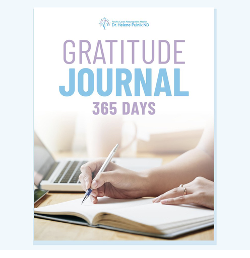
In this post, I’m bringing together two of my most-loved blogs, How to Build a Gratitude Practice and The Science of Gratitude, into one complete guide. First, you’ll learn what research says gratitude does for your body and mind. Next, I’ll share 8 simple steps and a 7-day plan for Thanksgiving week. Plus, you’ll get my free 365-Day Gratitude Journal, my holiday gift to you.
What Is Gratitude, Really?
To start, the word gratitude comes from the Latin word *gratia*, which means grace or thankfulness. In other words, gratitude is the simple act of noticing what’s good in your life, and where it came from.
However, gratitude isn’t about pretending everything is perfect. Instead, it’s about training your brain to see the good alongside the hard. For example, you can feel exhausted by holiday hosting and still feel thankful for the people around your table. Both can be true at once.
Most importantly, gratitude is a skill, not just a feeling. And like any skill, it grows stronger with a regular gratitude practice.
Why Gratitude Feels So Hard in Midlife
If gratitude feels harder than it used to, you’re not imagining it. In fact, there are real reasons it can slip away in your 40s and 50s.
First, our brains have a built-in negativity bias. In fact, we’re wired to notice problems and threats faster than good news. Long ago, that helped our ancestors survive. However, today it means one unkind comment can outweigh ten compliments.
Second, chronic stress keeps your body in “go” mode. So, when cortisol (your main stress hormone) stays high, your brain stays focused on what could go wrong. As a result, there’s very little room left to notice what’s going right.
Third, perimenopause and menopause add another layer. For example, as estrogen and progesterone shift, many women notice more anxiety, irritability, low mood and broken sleep. Plus, when you’re running on four hours of sleep, it’s hard to feel thankful for anything.
Finally, there’s the “Superwoman” load. Many women in midlife are caring for kids, partners, parents and careers all at once. Consequently, you may spend all day meeting everyone else’s needs, with no time to pause and notice your own life.
The good news? Fortunately, gratitude can be learned at any age. Also, research suggests it can help with many of the very things midlife makes harder.
The Science of Gratitude: What Research Shows
For years, gratitude was seen as a “nice” idea. Now, scientists have studied it closely, and the results are encouraging. So, here’s what the research shows.
Health Benefits of Gratitude: Better Sleep
In a study of 401 adults, people who felt more grateful slept better, fell asleep faster and slept longer. They also felt less tired during the day. Interestingly, the researchers found that grateful people had more positive thoughts and fewer worries at bedtime. In turn, those calmer thoughts helped them sleep.
Similarly, in a classic study by Dr. Robert Emmons and Dr. Michael McCullough, adults who wrote down their blessings each day for three weeks slept about half an hour longer. They also woke up feeling more refreshed.
Health Benefits of Gratitude: Heart Health
Researchers at UC San Diego studied 186 adults with early-stage heart failure. As the American Psychological Association reported, the more grateful patients had better mood, better sleep, less fatigue and lower inflammation. Then, some patients kept a gratitude journal, writing three things they were thankful for on most days for eight weeks. As a result, they showed lower levels of several inflammation markers. They also had healthier heart rhythms while writing, a sign of lower heart risk.
Health Benefits of Gratitude: Linked to a Longer Life
In 2024, Harvard researchers looked at nearly 50,000 older women in the Nurses’ Health Study. According to the Harvard T.H. Chan School of Public Health, women with the highest gratitude scores had a 9% lower risk of death over the next few years. In particular, the strongest link was with heart disease.
Health Benefits of Gratitude: Less Loneliness
Also, loneliness affects our health as much as our mood. Fortunately, a 2024 review of 26 studies with nearly 10,000 people found that more grateful people tend to feel less lonely. If you’re curious, you can read more about it from Greater Good at UC Berkeley.
Health Benefits of Gratitude: Better Self-Care
In the Emmons and McCullough study, people who counted their blessings each week exercised about 1.5 more hours a week. They also had fewer physical complaints and felt more hopeful about the week ahead. In short, when you appreciate your life, you’re more likely to care for your body.
Of course, gratitude isn’t a cure. Still, as a naturopathic doctor, I love that it’s free, safe and something you can start today.
[INSERT PHOTO 2: gratitude-practice-what-are-you-grateful-for.jpg. Delete this line]
Signs You Could Use a Gratitude Reset
How do you know if you need a little more gratitude in your life? Here are some common signs I see in my patients, especially around the holidays:
- You lie awake at night replaying your to-do list or worrying about tomorrow.
- You feel irritable, snappy or “touched out” by the end of the day.
- You notice what went wrong far more often than what went right.
- You feel lonely, even in a house full of people.
- You compare your life, body or holidays to what you see on social media.
- You rarely stop to enjoy the good moments, because you’re already on to the next task.
- You feel like you’re running on empty, giving to everyone but yourself.
If a few of these sound familiar, please don’t be hard on yourself. Instead, see them as a gentle nudge. Your body and mind are asking for a pause, and a gentle gratitude practice is a great place to start.
How to Build a Gratitude Practice in 8 Simple Steps
Here’s the best part: a gratitude practice doesn’t take hours. In fact, most of these steps take five minutes or less. Choose one or two to start, then add more as they become habits.
1. Write Down Three Things Each Day
This is the foundation of any gratitude journal. Each day, write down three things you’re thankful for. Also, they can be big or small. For example, a warm cup of coffee, a kind text from a friend or a parking spot right by the door all count.
Next, try to be specific. “My family” is lovely. However, “the way my daughter laughed at dinner tonight” helps your brain truly relive the moment.
2. Use Prompts When You Feel Stuck
Some days, gratitude flows easily. However, on other days, your mind goes blank. That’s normal! So, use a prompt to get started. For instance:
- What made you smile today?
- Who supported you recently, and how?
- What is something about your body you’re thankful for?
- What’s a small comfort you often take for granted?
Not surprisingly, my free journal includes 40 gratitude prompts to help you on the hard days.
3. Pause for a Mindful Moment
Mindfulness simply means paying attention to the present moment. To begin, take three slow, deep breaths. Then, notice one thing you can see, hear or feel that you appreciate. For example, it could be the warmth of your mug or the sound of rain.
Best of all, this takes less than a minute. Yet, it calms your nervous system and helps you shift out of “go” mode. If you’d like to learn more, Mindful.org has simple, free guided practices.
4. Savor the Good Moments
Often, we rush past good moments without noticing them. Next time something good happens, slow down. Then, take 20 to 30 seconds to really soak it in. Also, notice how it feels in your body.
In fact, this simple habit, called savoring, helps good moments “stick” in your memory. Over time, it may help balance out your brain’s negativity bias.
[INSERT PHOTO 3: gratitude-practice-mindful-moment-with-tea.jpg. Delete this line]
5. Look Back on Your Challenges
Now, this one may surprise you. First, think about a hard time you’ve already come through, such as an illness, a loss or a tough year. Then, ask yourself: “What did I learn? Who helped me? How did I grow?”
You don’t have to be grateful for the hard thing itself. Instead, you’re honoring your own strength and the people who carried you through. As a result, you may feel more resilient and more thankful for where you are now.
6. Write a Thank-You Letter
Think of someone who made a real difference in your life but never heard a proper thank-you. For example, it could be a teacher, a mentor, a friend or a family member. Then, write them a letter telling them exactly what they did and how it affected you.
In a well-known study by Dr. Martin Seligman, writing and delivering a gratitude letter gave people the biggest happiness boost of five exercises tested. Better yet, the boost lasted for about a month. You can learn how to do it from Greater Good in Action.
7. Share Thanks Out Loud
In addition, gratitude grows when you share it. So, tell people what you appreciate about them, right now, out loud. For example, thank the cashier by name, text a friend “I’m grateful for you” or tell your partner one thing they did that helped you today.
At Thanksgiving, try going around the table and having everyone share one thing they’re grateful for this year. Of course, it’s a simple tradition, but it can turn a busy meal into a meaningful memory.
[INSERT PHOTO 4: gratitude-practice-thanksgiving-family-dinner.jpg. Delete this line]
8. Give Back to Others
Finally, one of the most powerful ways to feel grateful is to help someone else. You might volunteer at a food bank, donate warm coats or simply check in on a lonely neighbor.
Above all, giving back reminds you of your own blessings. Plus, it builds connection and a sense of purpose. Even better, it’s a wonderful way to involve your kids or grandkids during the holidays.
[INSERT PHOTO 5: gratitude-practice-giving-back-volunteering.jpg. Delete this line]
Your 7-Day Gratitude Practice Plan for Thanksgiving Week
Ready to start? Here’s a simple plan for this week, from today through Saturday. Best of all, each day takes five minutes or less.
- Sunday, November 22: Download your free gratitude journal. Then, write down three things you’re grateful for tonight.
- Monday: Before you get out of bed, take three deep breaths and name one thing you’re looking forward to.
- Tuesday: Send one “thank you” text to someone who helped you this year.
- Wednesday: As you prep for Thanksgiving, pause to savor one moment: a smell, a song or a conversation.
- Thursday, Thanksgiving Day: Invite everyone at your table to share one thing they’re grateful for.
- Friday: Write a thank-you letter to someone who changed your life. Then, deliver or mail it.
- Saturday: Do one kind thing for someone in need, such as donating food or checking on a neighbor.
Also, keep writing your three things each night. By next Sunday, you’ll have a habit that can carry you all the way through the holidays and into the New Year.
Your Free Gift: The 365-Day Gratitude Journal
To help you get started, I created a 365-Day Gratitude Journal, and it’s my holiday gift to you. Inside, you’ll find:
- The Science of Gratitude: a short guide to how gratitude supports your health.
- 40 gratitude prompts for the days your mind goes blank.
- 365 daily pages, each with space to write three things you’re grateful for.
- A daily positive affirmation, such as “I allow myself to heal at my own pace.”
- A simple self-care tracker for water, protein, vegetables, fruit, exercise and stress relief, like deep breathing or meditation.
- A daily wellness tip to keep you inspired all year long.
Also, you can print it out or fill it in on your tablet. Either way, it only takes a few minutes a day.
Download Your Free 365-Day Gratitude Journal Here →
[INSERT PHOTO 6: free-365-day-gratitude-journal-cover.jpg. Delete this line]
Gratitude Also Helps Your Sleep, Stress and Holiday Health
Gratitude works best alongside other healthy habits. For example, if you’re struggling with sleep, a gratitude list at bedtime pairs beautifully with a calming cup of tea. You’ll find my favorite blends in Dr. Helene’s Restful Sleep: 5 Herbal Teas to Promote Sleep.
Likewise, if your sleep has been off since the clocks changed, read my post on fatigue after the time change. And if stress has left you feeling wired and tired, my Adrenal Recovery Guide explains how to support your stress hormones naturally.
Finally, if you’re heading into Thanksgiving week worried about your waistline, my holiday weight gain after 40 post has a simple game plan for the big day.
When to Get Extra Support
Of course, gratitude is a wonderful tool. However, it’s not a replacement for medical care. Please reach out to your doctor or a mental health professional if you notice:
- Low mood, sadness or hopelessness that lasts more than two weeks
- Losing interest in things you used to enjoy
- Ongoing anxiety, panic or trouble getting through your day
- Trouble sleeping most nights, or waking at 3 AM again and again
- New or worsening hot flashes, mood swings or brain fog
Also, the holidays can be especially hard if you’re grieving or feeling alone. If you ever have thoughts of harming yourself, please call or text 988, the Suicide and Crisis Lifeline, any time, day or night.
In fact, many symptoms that feel like “just stress” are actually linked to hormones, thyroid, blood sugar or nutrient imbalances. And that’s exactly what I look for in my practice.
Gratitude Practice FAQs
How long does it take for a gratitude practice to work? Often, people notice a small lift in mood within a week or two. In addition, studies found benefits like better sleep and fewer physical complaints within three to ten weeks. So, give it at least a month.
Is it better to journal in the morning or at night? Either works! However, writing at night may help with sleep, since it gives your mind something calm to focus on before bed.
What if I don’t feel grateful? That’s okay. You don’t have to feel it to practice it. Simply write down one small, true thing. Over time, the feeling often follows the habit.
Do I have to write it down? Writing is powerful, because it slows you down and helps you remember. Still, if writing isn’t your style, try saying three things out loud or sharing them with your partner at dinner.
Can gratitude really affect my physical health? Research suggests gratitude may support better sleep, lower inflammation and healthier heart rhythms. It’s not a cure, but it’s a safe, free habit with real potential benefits.
It’s Not Your Fault That You Feel Depleted
Let’s be honest. Often, the holidays don’t feel very grateful. Instead, they feel like a marathon of cooking, cleaning, shopping, hosting and smiling through it all. As a result, you might feel exhausted, irritable or even a little resentful. Then, you feel guilty for feeling that way.
Please hear me: it’s not your fault. You’ve been carrying so much for so long. On top of that, shifting hormones, poor sleep and constant stress can make it truly hard to feel calm or content. After all, that isn’t a character flaw. Rather, it’s your body asking for care.
Imagine Feeling Truly Grateful This Holiday Season
Now, imagine waking up rested, instead of dragging yourself out of bed. Imagine sitting at your Thanksgiving table feeling calm and present, actually enjoying the people you love. Also, imagine going through the holidays with no hot flashes, no mood swings and great sleep.
And imagine starting the New Year feeling like yourself again: energized, steady and full of gratitude for your health. That’s absolutely possible. So, I’d love to help you get there.
Book Your Free 30-Minute Discovery Call With Dr. Helene
A gratitude practice is a beautiful first step. However, if your sleep, mood, energy or hormones still feel off, you don’t have to figure it out alone.
In your Free 30-Minute Wellness Discovery Call, we’ll talk about what’s going on, what you’ve already tried and what may be holding you back. Then, together, we’ll map out a natural, personalized plan to help you feel like yourself again.
My calendar fills quickly during the holidays, so please don’t wait.
Schedule Your Free 30-Minute Discovery Call Now →
Or call 949-416-4670 or email info@pcnaturopathichealth.com. I see patients in person in Laguna Niguel, CA, and by telemedicine.
Thank you for being part of my community. Truly, I’m grateful for you.
In Health, Much Love, and Cheers to Healthy, Happy Holidays,
Dr. Helene