
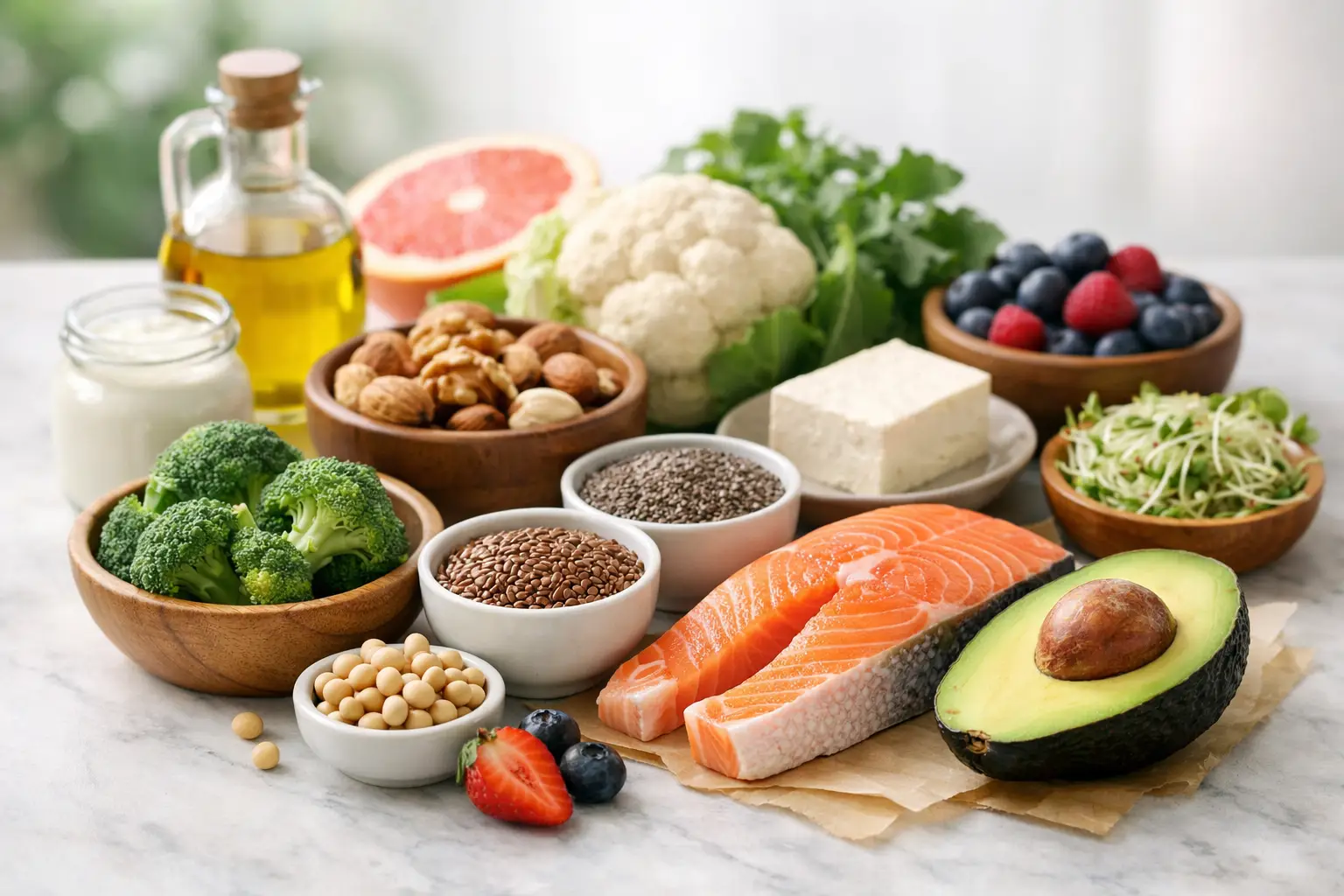
When your weight, mood, sleep, periods, or energy suddenly feel unfamiliar, it is understandable to wonder whether estrogen is part of the picture. The best foods for estrogen metabolism are not a quick fix for every hormone-related symptom, but they can provide meaningful support for the liver, digestive system, blood sugar, and regular elimination – all systems involved in how the body processes and clears estrogen.
For women in perimenopause and menopause, this conversation can feel especially personal. Shifting hormone levels may coincide with belly weight gain, breast tenderness, heavier or more irregular periods, brain fog, poor sleep, and changes in body composition. Nutrition cannot replace individualized medical care when symptoms are significant, but a thoughtfully built plate can become one steady, practical part of a hormone-supportive plan.
What Estrogen Metabolism Actually Means
Estrogen metabolism is the body’s process of breaking down, transforming, and eliminating estrogen. The liver prepares hormones and other compounds for removal through a series of enzyme-driven pathways. From there, the gut plays a major role. Estrogen metabolites leave the body through bile and stool, which is one reason regular bowel movements matter for hormone health.
This is not about harsh cleanses, juice fasts, or trying to “detox” your way out of uncomfortable symptoms. Your body already has sophisticated detoxification and elimination systems. The goal is to give those systems the raw materials and daily conditions they need: adequate protein, colorful plants, fiber, hydration, restorative sleep, and support for a healthy gut microbiome.
Estrogen symptoms also do not always mean estrogen is simply “too high.” In midlife, estrogen can fluctuate dramatically, while progesterone often declines first. Thyroid function, chronic stress, alcohol intake, insulin resistance, medication use, constipation, and sleep quality can all influence how you feel. That is why a root-cause approach looks beyond one hormone or one food.
The Best Foods for Estrogen Metabolism
Fiber-rich foods for daily elimination
Fiber is one of the most helpful nutritional tools for estrogen metabolism because it supports regular stool output and nourishes beneficial gut bacteria. When bowel movements are infrequent, hormone metabolites may have more opportunity to be reabsorbed rather than eliminated.
Aim to include a variety of fiber sources rather than relying on one “superfood.” Lentils, beans, chickpeas, oats, quinoa, chia seeds, ground flaxseed, berries, apples, pears, leafy greens, and vegetables all count. A nourishing breakfast might be plain Greek yogurt or a protein smoothie with berries, chia, and ground flax. At lunch or dinner, try adding lentils to a salad or replacing part of your rice with beans.
Increase fiber gradually if your digestion is sensitive. Adding a large amount too quickly can worsen bloating or discomfort, particularly if you have IBS, SIBO, or chronic constipation. More fiber also works best when paired with enough water and movement.
Cruciferous vegetables for plant compounds
Broccoli, cauliflower, cabbage, Brussels sprouts, kale, arugula, bok choy, and radishes are cruciferous vegetables. They contain natural compounds that have been studied for their role in supporting healthy estrogen metabolism pathways.
You do not need to force yourself through a plate of raw kale to benefit. Roasted Brussels sprouts, sautéed bok choy, cabbage slaw, broccoli added to a stir-fry, or arugula folded into a salad are all approachable options. Consistency matters more than perfection. Start with several servings each week and build from there.
If raw cruciferous vegetables trigger gas or bloating, cooked versions are often easier to tolerate. People with thyroid conditions can generally enjoy cruciferous vegetables as part of a varied diet, especially when they are cooked, but a personalized plan may be needed if thyroid function is impaired or iodine intake is low.
Ground flaxseed for lignans and fiber
Ground flaxseed is a small but powerful addition to a hormone-supportive diet. It provides fiber, omega-3 fats, and lignans, naturally occurring plant compounds that may support a healthy balance in estrogen activity.
Try one to two tablespoons of freshly ground flaxseed in oatmeal, yogurt, smoothies, soups, or homemade energy bites. Choose ground flax rather than whole seeds, since whole seeds may pass through the digestive tract largely intact. Store it in the refrigerator or freezer to help preserve its oils.
Flax is not a replacement for prescribed hormone therapy or a treatment for heavy bleeding, severe pelvic pain, or other concerning symptoms. It is simply an affordable, food-first way to add more supportive nutrients to your day.
Protein foods that support the liver
The liver needs amino acids from protein to carry out its many jobs, including hormone processing. Yet many women unintentionally under-eat protein, especially at breakfast, then find themselves struggling with afternoon cravings, low energy, and blood sugar swings.
Include a protein source at each meal. Eggs, fish, chicken, turkey, Greek yogurt, cottage cheese, tofu, tempeh, edamame, lentils, beans, and carefully selected protein powders can all fit. The best choice depends on your digestion, preferences, medical history, and overall dietary pattern.
Soy foods deserve a balanced conversation. Whole and minimally processed soy foods such as tofu, tempeh, edamame, and unsweetened soy milk contain isoflavones, which act differently from the body’s own estrogen. For many women, these foods can be a nourishing source of protein and may be especially helpful during menopause. If you have a history of estrogen-sensitive cancer or are taking hormone-related medication, discuss your individual situation with your oncology or medical team before making major dietary changes.
Colorful produce for antioxidant support
Estrogen metabolism is not only about one pathway. It is also influenced by inflammation, blood sugar regulation, liver health, and the health of the gut microbiome. Colorful vegetables and fruits provide polyphenols and antioxidants that support these foundations.
Think berries, cherries, pomegranates, citrus, red grapes, beets, onions, garlic, herbs, leafy greens, carrots, and peppers. Rather than chasing a short list of “hormone foods,” try to see color at most meals. A plate with salmon, roasted broccoli, beets, and a quinoa salad offers much more nutritional value than a highly restrictive plan built around supplements and fear of food.
Omega-3-rich foods for inflammation balance
Chronic inflammation can complicate hormone symptoms and metabolic health. Fatty fish such as salmon, sardines, trout, and mackerel provide omega-3 fatty acids and high-quality protein. Walnuts, chia seeds, hemp seeds, and flaxseed contribute plant-based omega-3 fats as well.
A practical goal is to include fatty fish a couple of times each week, if it works for your preferences and budget. Canned salmon or sardines can be convenient, nutrient-dense options. If seafood is not for you, a clinician can help determine whether a targeted omega-3 supplement makes sense.
Foods and Habits That Can Work Against Your Goals
No single food “blocks” estrogen metabolism, and rigid food rules often create more stress than progress. Still, a few patterns may make symptoms harder to manage. Frequent alcohol intake can place additional demand on the liver and is associated with higher breast cancer risk. Refined carbohydrates and added sugars can contribute to blood sugar instability, cravings, and weight changes for some people. Highly processed foods may also crowd out the fiber, protein, and micronutrients your body needs.
This does not mean you need to eliminate every glass of wine or dessert forever. It means noticing your own patterns with compassion and honesty. If wine is affecting sleep, hot flashes, anxiety, or next-day cravings, reducing it may offer more relief than another expensive supplement.
Build a Hormone-Supportive Day, Not a Perfect Diet
A supportive day of eating can be refreshingly ordinary. You might start with eggs and sautéed greens, or Greek yogurt with berries and ground flax. Lunch could be a large salad with chicken or lentils, colorful vegetables, olive oil, and pumpkin seeds. For dinner, consider salmon or tofu with roasted broccoli and a fiber-rich carbohydrate such as quinoa, beans, or sweet potato.
The details matter, especially when digestive symptoms are present. Someone with severe bloating may not tolerate beans and raw cruciferous vegetables right away. Someone using a GLP-1 medication for weight loss may need a different approach to protein, meal size, hydration, and constipation prevention. Someone with heavy periods, fatigue, and hair shedding may need evaluation for iron deficiency, thyroid dysfunction, or other underlying concerns rather than nutrition advice alone.
Your body is not failing because a trendy hormone cleanse did not work. Start with one steady change this week: add ground flax to breakfast, include a cruciferous vegetable at dinner, or build a more protein-rich lunch. If persistent hormone symptoms are leaving you exhausted or discouraged, personalized functional medicine testing and nutrition guidance can help you understand what your body needs to feel like you again.