
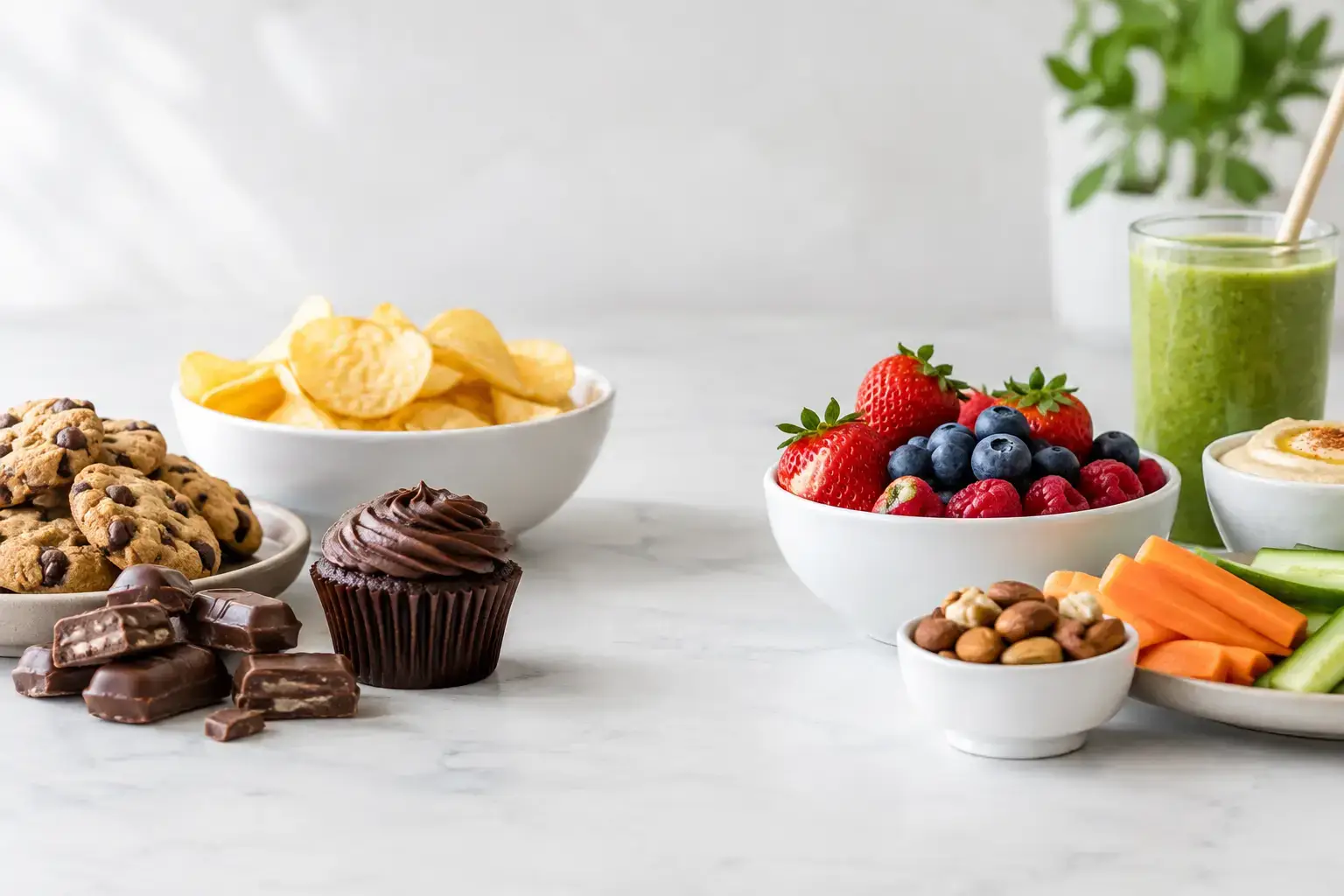
A craving can feel strangely urgent at 3 p.m. or after dinner, especially when sleep has been poor, stress is high, or your body is changing through perimenopause or menopause. Healthy food swaps for cravings are not about forcing yourself to ignore hunger or replacing every enjoyable food with something you do not like. They are about giving your body more of what it may be asking for: steady fuel, satisfying texture, and nutrients that support more stable energy.
When cravings become frequent or intense, they are often more than a willpower issue. Blood sugar swings, skipped meals, low protein intake, dehydration, stress, restrictive dieting, and hormone shifts can all make highly processed foods feel harder to resist. A practical swap can interrupt that cycle without making food feel like another source of pressure.
Why cravings can feel stronger in midlife
Many women notice that their appetite and eating patterns change in their 40s and 50s. A meal that once kept you satisfied may suddenly leave you searching the pantry an hour later. Declining estrogen can affect insulin sensitivity, body composition, sleep, and hunger signals. Add a demanding schedule, disrupted sleep, or chronic stress, and the body may reach for quick energy in the form of sugar, refined carbohydrates, caffeine, or salty snack foods.
This does not mean you have “failed” at healthy eating. It may mean your meals need a different foundation. A breakfast of coffee and toast, for example, can be followed by an energy dip and a powerful afternoon desire for sweets. Pairing meals and snacks with protein, fiber, and healthy fats tends to slow digestion and supports a steadier release of energy.
It also helps to distinguish a craving from physical hunger. Hunger builds gradually and is usually satisfied by a range of foods. A craving may feel very specific – chocolate, chips, ice cream, bread – and can appear quickly in response to emotion, habit, fatigue, or a blood sugar crash. Both deserve curiosity rather than judgment.
Healthy food swaps for cravings that feel satisfying
The best swap is one you will actually eat. If you want something creamy, crunchy, sweet, or savory, choose an option that honors that preference while adding more nourishment. The goal is not to make every choice perfect. It is to make the more supportive choice easier and more satisfying most of the time.
When you want something sweet
Instead of reaching for candy on an empty stomach, try apple slices with almond butter or peanut butter and a sprinkle of cinnamon. You still get sweetness and crunch, but the fiber and fat can help the snack last longer. If apples are not appealing, berries with plain Greek yogurt, cottage cheese, or an unsweetened coconut yogurt can offer a similar balance.
For a chocolate craving, consider a few squares of dark chocolate alongside walnuts, pumpkin seeds, or a protein-rich yogurt. Dark chocolate can absolutely fit into a healthy eating pattern. The difference is pairing it with something that helps you feel satisfied, rather than eating it as a quick fix when you are already overly hungry.
Frozen grapes or blended frozen berries can be refreshing in warmer months, but fruit alone may not be enough if you are prone to blood sugar dips. Add a protein source, especially in the afternoon. A small smoothie with unsweetened protein powder, berries, chia seeds, and milk of choice can satisfy a dessert-like craving while providing more staying power.
When chips sound irresistible
A craving for chips is often a craving for salt, crunch, or stress relief at the end of a long day. Try roasted chickpeas, lightly salted edamame, pumpkin seeds, or air-popped popcorn with olive oil and seasoning. These choices still deliver texture, but they bring fiber, protein, or more volume than a handful of chips.
If you truly want chips, it may be more helpful to portion some into a bowl and enjoy them with a balanced meal than to tell yourself they are off limits. Restriction can make certain foods feel more powerful. Pairing a favorite salty food with turkey roll-ups, hummus and vegetables, or a simple soup can reduce the urge to keep grazing.
When you crave bread, pasta, or pizza
Carbohydrates are not the enemy. Your brain and muscles use glucose for energy, and many nourishing foods contain carbohydrates. The question is whether the meal includes enough protein, fiber, and fat to support your energy after you eat.
If toast is calling your name, choose a higher-fiber bread and add eggs, avocado, smoked salmon, or cottage cheese. When pasta is the comfort food you want, keep the pasta if you enjoy it, then build out the plate with chicken, shrimp, lentils, turkey meatballs, or white beans and plenty of vegetables. A protein-forward sauce or a side salad can make the meal much more satisfying without taking away the comfort.
For pizza cravings, try a whole-grain or cauliflower-based crust if you enjoy it, but do not assume cauliflower is automatically the better answer. A regular crust pizza topped with vegetables and protein can fit beautifully into a balanced approach. Two slices with a large salad may satisfy you more than a “healthy” substitute that leaves you still searching for food afterward.
When you want ice cream at night
Evening cravings are common when dinner was too light, the day was stressful, or sleep has been inconsistent. Start by asking whether you ate enough at dinner. A meal that includes protein, colorful vegetables, fiber-rich carbohydrates, and a satisfying fat often reduces the need to hunt for snacks later.
If you still want something cold and creamy, try Greek yogurt topped with berries, chopped nuts, and a little dark chocolate. A blended protein smoothie bowl can work well, too. For some people, a small bowl of real ice cream enjoyed slowly and without guilt is the most satisfying choice. The best option depends on whether a substitute feels genuinely enjoyable or simply leaves you frustrated.
Build meals that prevent the crash
Food swaps work best when they are not carrying the entire burden of your day. If cravings happen daily, look upstream at your meal rhythm. Many people do better with consistent meals that include 25 to 35 grams of protein, although individual needs vary based on body size, activity, health history, and goals.
At breakfast, this might mean eggs with vegetables and avocado, a protein smoothie with berries and chia, or Greek yogurt with seeds and fruit. At lunch and dinner, aim for a clear protein source, a generous serving of non-starchy vegetables, a fiber-rich carbohydrate if desired, and a satisfying fat such as olive oil, avocado, nuts, or tahini.
Do not overlook hydration. Thirst can sometimes show up as a vague urge to snack, particularly when you have been relying on coffee. Water, mineral water, or herbal tea may help, but hydration alone will not resolve a true need for food. If you are hungry, eat a nourishing snack rather than trying to drink your way through it.
Look for your personal craving pattern
A short, nonjudgmental food and symptom log can reveal useful patterns. Notice when cravings occur, what you ate beforehand, how you slept, your stress level, and where you are in your menstrual cycle if relevant. You may find that chocolate cravings follow a low-protein lunch, that salty snacks appear after a stressful commute, or that late-night sugar cravings increase after several nights of poor sleep.
This information can be especially valuable if you are also dealing with stubborn weight changes, fatigue, digestive discomfort, brain fog, irregular cycles, or hair thinning. Persistent cravings may be connected to blood sugar dysregulation, nutrient needs, medication effects, sleep disruption, or hormonal changes. Personalized care can help clarify the bigger picture rather than treating every craving as a discipline problem.
At Pacific Naturopathic Health, a root-cause approach considers your symptoms, health history, nutrition patterns, and appropriate functional medicine testing to create a plan that feels realistic for your life. You deserve more than vague advice to “eat less” when your body is clearly asking for support.
Try choosing one craving that comes up often this week and plan a satisfying alternative before you need it. Keep the ingredients visible, eat it sitting down, and pay attention to how your energy and hunger feel afterward. Small shifts practiced consistently can help food feel calmer, more nourishing, and far less controlling.