
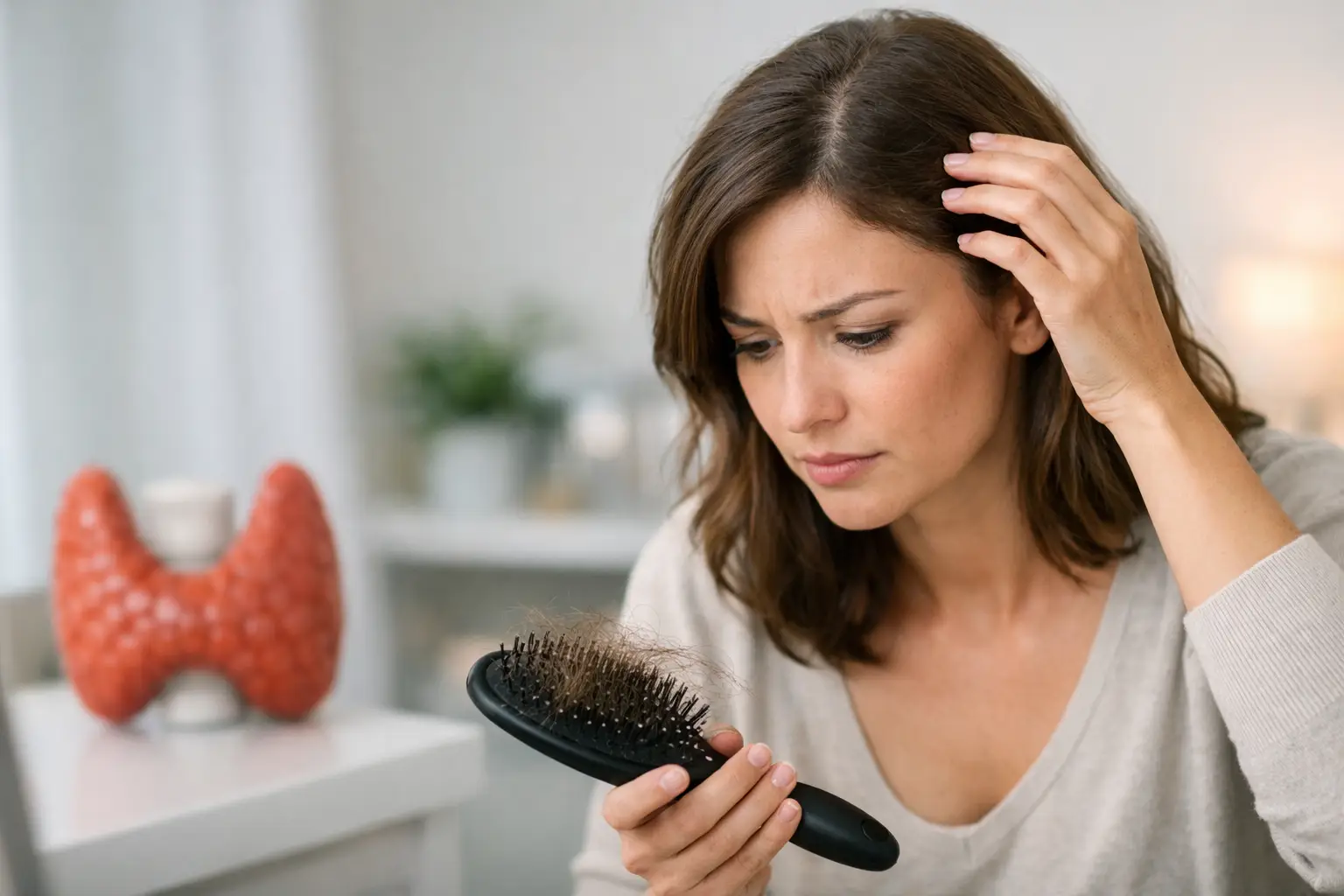
Seeing more hair in the shower drain or noticing that your ponytail feels thinner can be deeply unsettling, especially when it arrives alongside fatigue, weight changes, dry skin, poor sleep, or brain fog. Can thyroid cause hair loss? Yes. Both an underactive and overactive thyroid can disrupt the normal hair-growth cycle, often causing diffuse thinning across the scalp rather than a few isolated bald patches.
The reassuring part is that thyroid-related hair changes can improve when the underlying imbalance is identified and appropriately addressed. The less reassuring part is that hair loss rarely has one simple cause. Thyroid function, stress, nutrient status, hormonal shifts, medications, genetics, and recent illness can all overlap. Looking at the full picture helps create a clearer path forward.
Can Thyroid Cause Hair Loss in Women?
Your thyroid is a small, butterfly-shaped gland in the neck, but its influence reaches far beyond metabolism. Thyroid hormones help regulate energy production, body temperature, digestion, menstrual cycles, mood, and the activity of hair follicles.
Hair grows in cycles. Most scalp hairs are normally in the active growth phase, while a smaller number rest and shed. When thyroid hormone levels are too low or too high, more follicles may shift prematurely into the resting phase. The result can be increased shedding several weeks or months later.
For many women in midlife, the frustration is not only the hair thinning. It is the feeling that several changes are happening at once: stubborn weight gain, low motivation, disrupted sleep, constipation, anxiety, palpitations, or menstrual changes. These symptoms deserve a thoughtful evaluation rather than being dismissed as an inevitable part of aging.
Hypothyroidism and hair thinning
Hypothyroidism occurs when the thyroid does not produce enough thyroid hormone. Hashimoto’s thyroiditis, an autoimmune condition, is a common cause in the United States. With low thyroid function, hair may become dry, coarse, brittle, and slow-growing. Some people notice increased shedding from the scalp, while others notice thinning at the outer edges of the eyebrows.
Hypothyroidism may also contribute to fatigue, feeling cold, constipation, low mood, dry skin, puffiness, heavy or irregular periods, and difficulty losing weight. Not everyone experiences every symptom, and symptoms can develop gradually enough that they are easy to normalize.
Hyperthyroidism and increased shedding
Hyperthyroidism means there is too much thyroid hormone circulating in the body. It can also trigger diffuse hair shedding, although the hair may feel finer or softer rather than dry. Possible accompanying symptoms include a racing heartbeat, feeling unusually warm, shakiness, frequent bowel movements, unintentional weight loss, anxiety, and trouble sleeping.
The key point is that both ends of the thyroid spectrum can affect the hair-growth cycle. Hair loss alone cannot tell you whether thyroid function is low or high.
What Thyroid-Related Hair Loss Usually Looks Like
Thyroid-related shedding is commonly described as diffuse, meaning it is spread throughout the scalp. You may see more hair on your brush, pillow, or shower floor, and your part may gradually appear wider. Unlike some genetic forms of hair thinning, there may not be one sharply defined area of loss at first.
This shedding can resemble telogen effluvium, a temporary but sometimes dramatic shift of hairs into the shedding phase. It often appears two to three months after a physical or emotional stressor, including thyroid imbalance, a major illness, surgery, rapid weight loss, childbirth, or a significant dietary change.
Thyroid disease can also occur alongside other hair-loss conditions. Autoimmune thyroid disorders are associated with a higher likelihood of alopecia areata, which tends to cause smooth, round patches of hair loss. If you have distinct bald patches, scalp pain, redness, scaling, or scarring, seek prompt evaluation from a qualified clinician or dermatologist.
Why Normal Thyroid Labs Do Not Always End the Conversation
A thyroid-stimulating hormone, or TSH, test is often the first screening tool. It is useful, but it may not always provide the entire clinical picture, particularly for someone with persistent symptoms, a personal or family history of autoimmune disease, or changing hormone needs.
Depending on your symptoms and medical history, a clinician may consider free T4, free T3, and thyroid antibodies in addition to TSH. Thyroid antibodies can help identify autoimmune activity such as Hashimoto’s thyroiditis or Graves’ disease. Lab results should always be interpreted in context, not treated as isolated numbers.
It is also wise to tell your clinician about supplements. Biotin, commonly included in hair and nail products, can interfere with certain thyroid lab assays and create misleading results. Ask whether you should pause it before testing and for how long.
A root-cause assessment may also look beyond the thyroid. Iron deficiency, low ferritin, vitamin D insufficiency, inadequate protein intake, B12 deficiency, zinc deficiency, chronic digestive dysfunction, blood-sugar instability, and chronic stress can all contribute to shedding or poor hair quality. During perimenopause and menopause, shifting estrogen and progesterone levels may add another layer to the picture.
Supporting Hair Recovery Without Guesswork
When thyroid imbalance is the driver, the priority is appropriate medical care to stabilize thyroid function. Hair growth moves slowly, so visible recovery often lags behind improvements in energy or other symptoms. It may take several months for shedding to settle and longer for new growth to become noticeable. That delay can be discouraging, but it does not necessarily mean treatment is failing.
Avoid the temptation to chase every hair supplement or use high-dose iodine on your own. Excess iodine can worsen thyroid dysfunction in some people, especially those with autoimmune thyroid conditions. More is not always better with selenium, zinc, iron, or thyroid-support blends either. Targeted supplementation should follow a review of your health history, medications, diet, and lab findings.
Nutrition still matters. Hair is largely made of protein, and overly restrictive eating plans can intensify shedding. Aim for regular meals with adequate protein, colorful plants, healthy fats, and mineral-rich foods. If weight loss is one of your goals, a sustainable approach is generally kinder to your metabolism and hair than aggressive calorie restriction or rapid loss.
Stress support matters as well, not because stress is “all in your head,” but because sustained stress can affect sleep, appetite, blood sugar, inflammation, and the hair cycle. Gentle movement, consistent meals, a realistic bedtime routine, and enough recovery can support the body while you and your clinician investigate the underlying issue.
When to Seek Personalized Care
Make an appointment if hair loss is new, rapidly worsening, or accompanied by fatigue, weight changes, menstrual shifts, temperature intolerance, digestive changes, heart palpitations, or persistent brain fog. It is especially worthwhile to seek care if you have a family history of thyroid disease, autoimmune conditions, anemia, or early hair thinning.
A personalized evaluation can help distinguish thyroid-related shedding from female-pattern hair loss, medication effects, nutritional deficiencies, stress-related telogen effluvium, or multiple factors occurring together. At Pacific Naturopathic Health, this whole-person approach may include a detailed symptom review, nutrition assessment, functional medicine-informed lab interpretation, and a plan built around your individual needs.
You do not have to accept thinning hair and feeling unlike yourself as something you simply have to live with. Your hair can be a meaningful signal from the body. Listening to that signal with patience, appropriate testing, and compassionate support can help you move toward steadier energy, greater confidence, and feeling more like you again.