
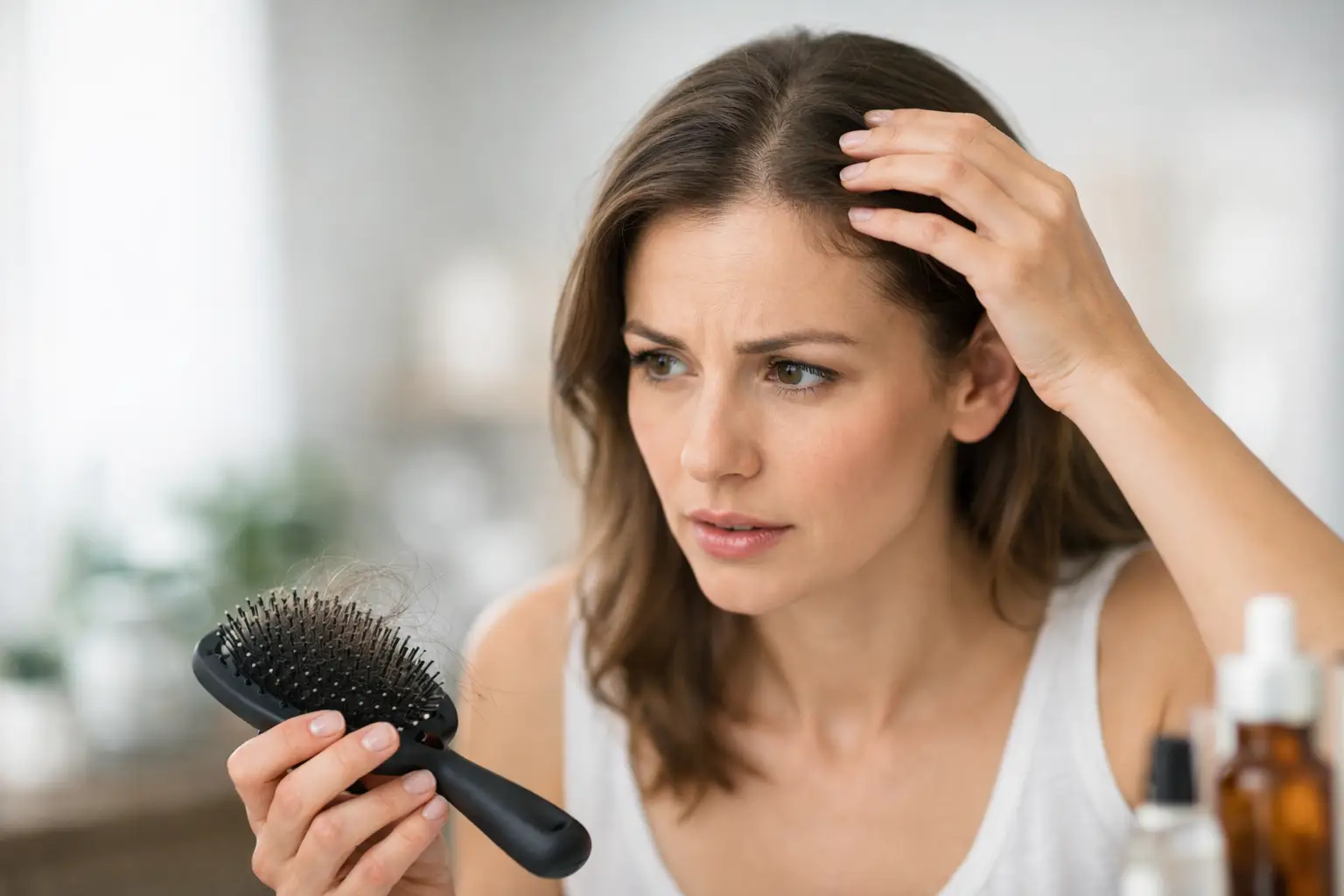
Finding more hair in the shower drain, noticing a wider part, or realizing your ponytail feels smaller can be genuinely upsetting. Hormonal hair thinning in women is common, particularly through perimenopause and menopause, but it is never something you should feel pressured to simply accept or brush aside. Your hair can be a visible signal that your body needs more support.
Hair changes are rarely caused by one thing alone. Hormones matter, but so do thyroid function, stress physiology, nutrient status, blood sugar balance, inflammation, sleep, medications, and the health of your scalp. A thoughtful evaluation can help move you beyond guesswork and toward a plan that supports your whole body.
Why hormones can affect your hair
Hair follicles are remarkably sensitive to hormonal shifts. Each follicle moves through a cycle of growth, transition, rest, and shedding. When that cycle is disrupted, more hairs may enter the shedding phase at once, growth may shorten, or new strands may grow back finer than before.
During perimenopause and menopause, estrogen and progesterone naturally fluctuate and eventually decline. Estrogen helps support the amount of time hair remains in its growth phase. As estrogen changes, the relative effect of androgens, often called male-type hormones, can become more noticeable. Some women begin to see thinning through the crown, temples, or part line, even when their androgen lab values fall within a standard reference range.
This does not mean that every woman with thinning hair has a hormone imbalance, or that hormone therapy is right for everyone. It means the pattern deserves context. Your symptoms, health history, menstrual changes, family history, medications, and lab results all matter.
The patterns of hormonal hair thinning in women
Hormone-related hair changes do not always look the same. Some women experience gradual thinning at the top of the scalp, with a widening part and less volume. This pattern can be associated with female pattern hair loss, which may have a genetic component and may become more apparent with age or hormonal changes.
Others experience noticeable shedding all over the scalp. This is sometimes called telogen effluvium, a temporary shift in the hair cycle that can happen several months after a major stressor. A difficult illness, surgery, rapid weight loss, childbirth, intense emotional stress, restrictive dieting, or a medication change may all be relevant. Hormonal transitions can add another layer.
Hair loss that occurs in patches, includes scalp pain, burning, scaling, or itching, or progresses quickly deserves prompt evaluation by a qualified medical professional or dermatologist. Those symptoms may point to conditions that require specific treatment.
Look beyond estrogen and progesterone
It is understandable to focus on estrogen when hair begins changing in midlife. Yet a root-cause approach asks a wider question: what conditions could be making the follicle more vulnerable right now?
Thyroid changes
Both underactive and overactive thyroid patterns can affect hair texture, growth, and shedding. Women with thyroid concerns may also notice fatigue, temperature sensitivity, constipation or loose stools, changes in weight, dry skin, anxiety, or heart palpitations. A comprehensive thyroid assessment should be interpreted alongside symptoms, rather than relying on one number alone.
Stress and poor sleep
Chronic stress can alter cortisol rhythms, disrupt sleep, increase inflammation, and influence appetite and blood sugar. A stressful season may not be the sole reason for hair shedding, but it can be the factor that pushes a susceptible system past its threshold. Supporting the nervous system is not a superficial wellness recommendation. It can be a meaningful part of restoring resilience.
Iron, protein, and other nutrient needs
Hair is not essential for survival, so the body may direct nutrients toward more urgent functions when intake or absorption is inadequate. Low iron stores, inadequate protein, low vitamin D, zinc insufficiency, and certain B vitamin concerns can contribute to poor hair quality or shedding in some people.
This is especially relevant for women with heavy periods, a history of restrictive eating, digestive dysfunction, frequent dieting, plant-based diets without careful planning, or recent use of appetite-suppressing weight-loss medications. Healthy weight loss should protect lean mass and nutritional status, not leave your body under-fueled.
Blood sugar and insulin resistance
Insulin resistance can influence androgen signaling and is often connected with stubborn weight changes, cravings, fatigue after meals, and, for some women, polycystic ovary syndrome. When blood sugar is frequently swinging from highs to lows, the body may experience more inflammatory and hormonal strain. Stabilizing meals can support far more than the number on the scale.
What a thoughtful evaluation may include
A short appointment that ends with “your labs are normal” can feel discouraging when your reflection tells a different story. Individualized care looks at the full picture: when the thinning started, its pattern, menstrual and menopause symptoms, energy, stress, sleep, digestion, diet, medications, family history, and recent health changes.
Depending on your situation, a clinician may consider lab testing that evaluates thyroid function, iron status, vitamin D, blood sugar markers, and selected sex or adrenal hormones. Testing should be purposeful. More tests are not automatically better, and results need to be interpreted in the context of your symptoms and medical history.
A scalp examination is also valuable. If the diagnosis is unclear, or there are signs of inflammatory or scarring hair loss, referral to dermatology may be the right next step. Functional and conventional approaches can work together, especially when there is a need to protect follicles early.
Practical ways to support healthier hair growth
There is no overnight fix for hair thinning. Hair grows slowly, and meaningful progress often takes several months. The goal is not to chase every supplement or trending scalp treatment. It is to create the conditions that support healthier follicles while addressing the factors that may be driving the change.
Start with consistent, nourishing meals. Include a quality protein source at breakfast, lunch, and dinner, and avoid overly restrictive plans that leave you hungry, exhausted, or losing weight too quickly. Build meals around colorful produce, fiber-rich carbohydrates, healthy fats, and adequate hydration. If you suspect food sensitivities or struggle with bloating, reflux, constipation, or diarrhea, digestive support may be an important part of the conversation.
Protect your sleep window as much as possible. A regular bedtime, morning light exposure, less late-night screen time, and a wind-down routine may sound simple, but consistency can help support cortisol rhythms and energy. Gentle movement, strength training, and restorative activities can also improve stress resilience without adding more strain to an already depleted system.
Be gentle with your hair itself. Avoid frequent tight styles, harsh chemical processing, and high-heat styling when possible. These practices may not cause hormonal thinning, but they can increase breakage and make reduced density more noticeable. A gentle scalp care routine can support comfort, especially if you have dryness or irritation.
Supplements should be individualized. Biotin is often marketed for hair, but it is not a universal answer and can interfere with certain lab tests. Iron should not be taken without a reason and appropriate guidance. The most effective protocol is the one that addresses your actual needs rather than a long list of products.
When personalized support makes sense
If your hair changes are happening alongside fatigue, brain fog, weight gain, irregular periods, hot flashes, sleep disruption, digestive symptoms, or low mood, those clues deserve to be connected. You do not have to separate your hair concerns from the rest of your health story.
At Pacific Naturopathic Health, care is centered on listening closely, using appropriate functional medicine testing, and creating individualized plans that support hormone health, thyroid function, nutrition, stress resilience, and sustainable wellness. Treatment decisions should always account for your personal history, current medications, and goals.
Your hair may not change as quickly as you would like, but your body is not failing you. It is communicating. With patient investigation and the right support, this can become an opportunity to care for the deeper patterns affecting how you feel, look, and move through midlife.